Website strategy · 5 min read
Does your business need a new website, or just a few improvements?
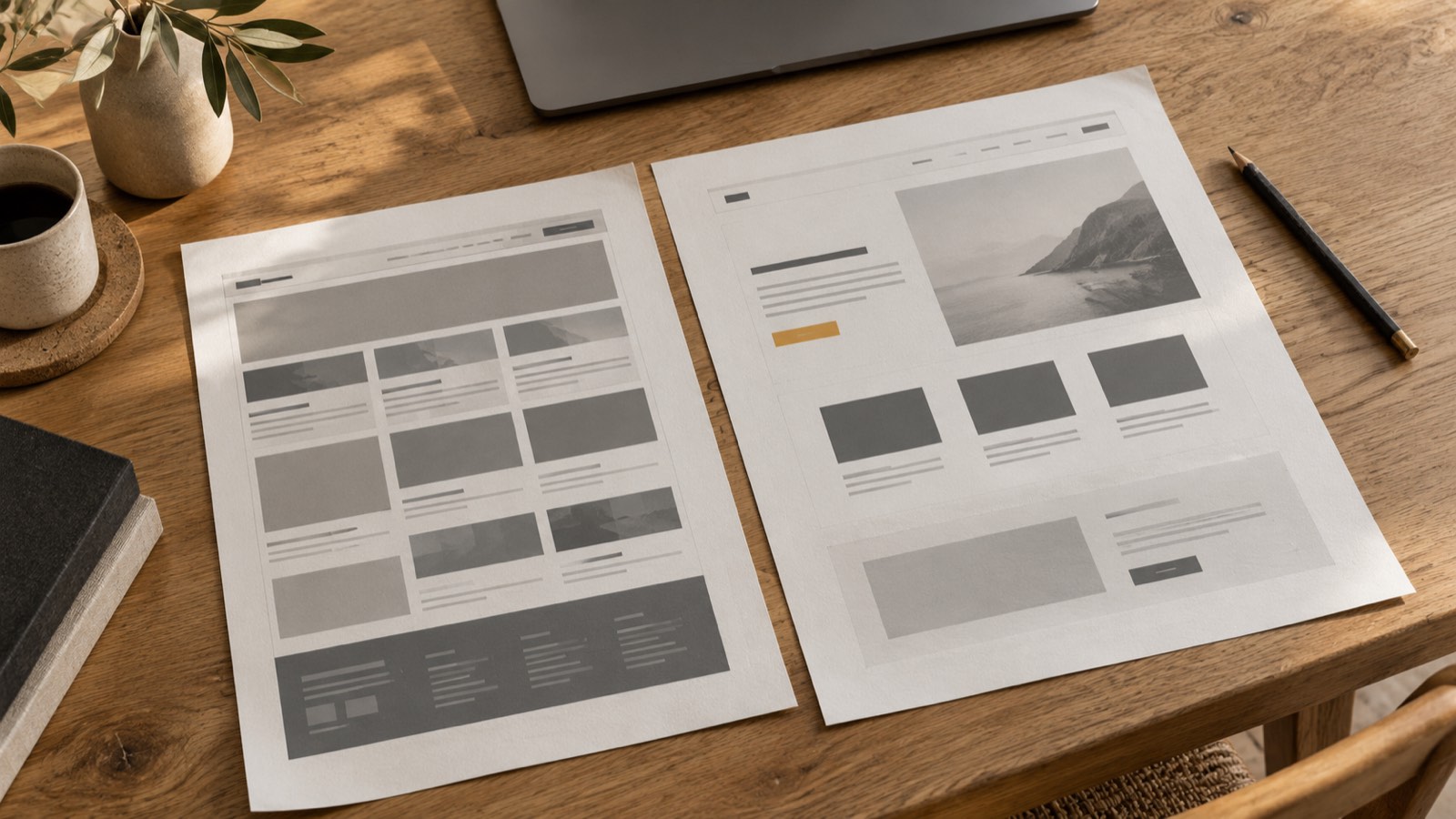
A beautiful website can still leave a potential customer thinking: “This looks good, but is it right for me?”
An older website can still do its job well.
The useful question is whether your website helps the right people understand your business, trust your work and take the next step.
Improve the existing site when the problems are specific and its foundations still work. Consider a redesign when the structure, content or technology makes those problems difficult to solve properly.
Here is how to tell the difference before spending money.
First, separate three different problems
“Not enough enquiries” is a symptom. It does not tell you what needs changing.
| What you are seeing | What to investigate first |
|---|---|
| Few suitable people reach the website | How people discover you, which searches bring them in and whether your service pages match what they need. |
| Suitable people visit but rarely enquire | Whether they can understand the offer, assess your credibility and take the next step comfortably. |
| Enquiries arrive but seldom become paid work | Enquiry quality, pricing, availability, response time and the sales conversation. |
What you are seeing
Few suitable people reach the website
What to investigate first
How people discover you, which searches bring them in and whether your service pages match what they need.
What you are seeing
Suitable people visit but rarely enquire
What to investigate first
Whether they can understand the offer, assess your credibility and take the next step comfortably.
What you are seeing
Enquiries arrive but seldom become paid work
What to investigate first
Enquiry quality, pricing, availability, response time and the sales conversation.
These problems can overlap. The point is to avoid paying for a visual redesign when the main obstacle sits elsewhere.
If your numbers are small, combine the available data with real enquiry conversations. A quiet week alone is not enough to diagnose a website.
Test one customer journey, not every page
Choose one service you want more business for. Open its page on your phone as if someone had sent you the link.
Can a new visitor answer these five questions?
- Is this the service I need?
- Does this business work with people or projects like mine?
- What evidence helps me trust it?
- What do I need to know before getting in touch?
- What happens when I enquire?
Then follow the actual contact or booking route. Check that it works and that the enquiry reaches the right person.
A vague answer gives you something specific to improve. Several missing answers across the site suggest a broader problem.
When targeted improvements are the better investment
Keep the current website when its structure is useful, its mobile experience is sound and it can accommodate the changes you need.
Consider a hypothetical building company. Its website loads properly and its project photography is strong, but visitors cannot tell whether it takes on renovations, new builds or both. The contact page asks only for a name and email.
The first job could be to clarify the services, organise projects around them and create an enquiry form that captures the proposed work. Replacing the entire website may add little to that solution.
Other focused improvements might include clearer opening copy, better service information, relevant testimonials or a simpler booking route.
The brief should name the problem and the intended improvement. “Help renovation clients assess fit and describe their project” gives the work more direction than “make the website modern”.
When a redesign earns its place
A redesign becomes more useful when fixing individual pages would leave the underlying problem intact.
Your business may have outgrown the site. Services have been added without a clear structure. The content addresses customers you no longer target. Mobile layouts fail across several pages, or the platform makes necessary updates cumbersome.
Ask for a comparison between repairing the current website and rebuilding it. Consider the scope, cost, limitations and ongoing upkeep of each option.
The least expensive quote is not necessarily the best value. Equally, a larger rebuild needs a stronger justification than a different visual style.
A real example: making a complex offer easier to explore
The Luxury Holiday Company offers luxury cruises, expeditions and tailor-made journeys. Attractive travel photography matters, but visitors also need to understand those choices, assess the adviser's experience and explain the trip they have in mind.
The website brought together clear trip pages, Carolyn’s experience, layouts for phones and computers, and a detailed enquiry form.
The useful lesson is that each part has a job: explain the offer, establish confidence or help someone move forward.
Explore The Luxury Holiday Company case study.
Apply the same thinking to your business. A consultant might need clearer explanations of their engagements. A clinic might need more useful practitioner and appointment information. The design should support the decision your customer is making.
Keep the parts that already create value
Before changing a website, identify useful pages, existing search traffic, important URLs, forms, booking connections and tracking.
Preserve useful page addresses where possible. Where they change, plan appropriate redirects. Test the enquiry journey before launch and confirm that submissions arrive with the information needed to reply.
A stronger design should build on useful foundations rather than accidentally discard them.
What should you ask a website designer?
Before accepting a proposal, ask:
- What is the main problem you recommend solving?
- Why does it need this scope rather than a smaller change?
- What will you preserve, and what will you test?
- How will we judge whether the work helped?
Useful outcomes might include more suitable enquiries, fewer repeated questions or a booking process that customers can complete more easily. Agree what can actually be measured rather than assuming every change will produce more sales.
KezConcepts plans website redesigns for service businesses around the offer, the customer and the route to enquiry.
Could your website bring in more of the right enquiries?
Get a free personalised plan with 3 website changes you can make in the next 30 days.
Get my free plan ↗