Travel websites · 5 min read
What should a travel adviser website show before someone enquires?
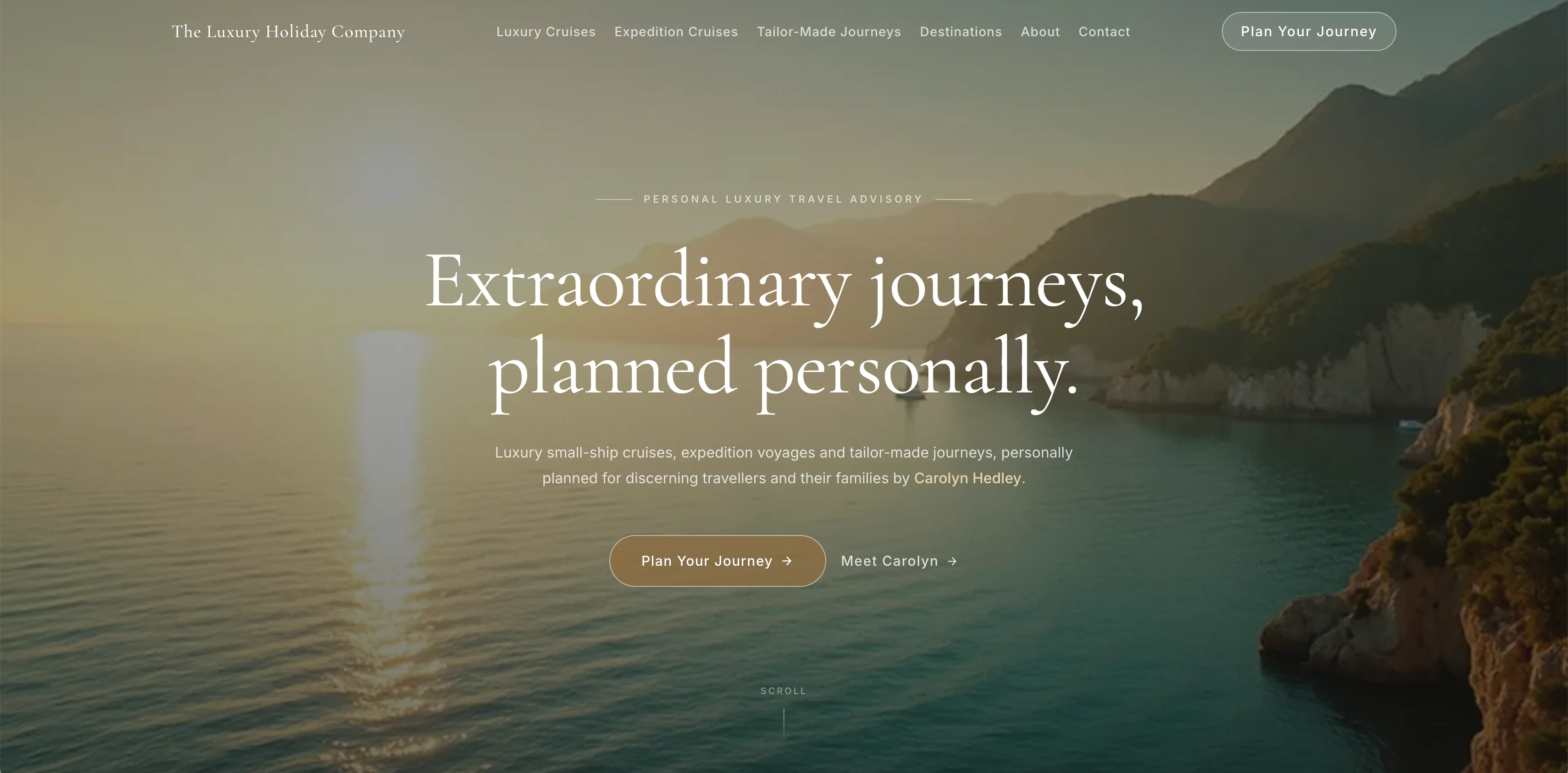
A travel website should help someone understand why to plan through you, then make it easy to start a useful conversation.
Show six things clearly: who you help, your specialist knowledge, real client experiences, how planning works, your fees and the next step.
A beautiful destination photo can draw someone in. It does not explain how you would handle their family holiday, cruise or complex itinerary.
These are the questions I would check on an independent premium travel adviser’s website, drawing on our work for The Luxury Holiday Company.
1. Say who you help and what you plan
Make it clear whether you arrange tailor-made holidays, cruises, family travel, expeditions or a particular mix.
Use the terms your clients use. “Personal travel planning for cruises and tailor-made holidays” tells someone more than “extraordinary experiences”.
If you work mainly with clients in Australia or New Zealand, say so. If different trip types need different advice, give each one a clear path to the relevant information.
You do not need a page for every place on the map. Start with the trips you know well and want more enquiries about.
2. Make your expertise specific
Explain what your experience helps a traveller do.
For a cruise adviser, that might mean choosing a ship, cabin and route that suit the client. For a family trip, it might mean planning around children’s ages, travel time and the pace everyone can enjoy.
Use first-hand knowledge, current credentials and useful examples you can support. Put that detail beside the relevant service, so visitors do not have to find your About page to understand your value.
3. Show what you helped a client solve
A short trip story can explain your work better than another destination gallery.
- What did the traveller want?
- What made the planning difficult?
- What did you arrange or recommend?
- What did the client say about the experience?
Use genuine feedback and photographs you have permission to share. Choose stories that match the trips you want to plan.
For The Luxury Holiday Company, we brought the adviser’s experience, client feedback and distinct travel options into a clearer enquiry journey.
The owner reported four website enquiries in the first 30 days after relaunch, compared with roughly one in the previous six months. One had committed. These are one client’s reported figures; the website’s contribution was not measured separately.
4. Explain the planning process and fees
Tell people what happens when they get in touch, what information you need and when a planning fee or deposit applies.
If a planning fee is credited towards a booking, explain the conditions in plain words. Check that your homepage, service pages and contact page describe it consistently.
A short process can be enough: share your ideas, discuss the brief, agree the planning service, then review the proposed trip. Use the steps that reflect how you actually work.
Explain how you support clients before and during travel, with promises you can reasonably deliver.
5. Make the first trip enquiry useful
Ask for enough detail to start the conversation:
- Destination ideas or the kind of trip.
- Approximate dates and flexibility.
- Number of travellers.
- A rough budget, with an option for people who need guidance.
- Anything that matters most to them.
Keep the first form manageable on a phone. Leave detailed booking information until it is needed.
Explain when you aim to reply and what the next step will be. Then test that the enquiry reaches the right inbox.
6. Connect your existing tools clearly
If you already use a network profile, booking tool or client portal, explain what each link is for.
Keep the route for a new trip enquiry easy to find. Existing clients looking for documents should be able to find their own next step too.
Check the site on your phone: can you read the text, open the menu and complete the form without pinching the screen? Use photos sized for the page so people can see your work without a long wait.
Start with the first unclear answer
Ask someone who has not used your service to look at your homepage. Can they explain who you help, why your advice matters and how to enquire?
Start where they hesitate. Keep a note of whether new trip enquiries fit your specialisms, budgets and capacity.
See how this fits our website design for independent travel advisers, or review the website scope and pricing.
Could your website bring in more of the right enquiries?
Get a free personalised plan with 7 opportunities and clear changes you can make in the next 30 days.
Get my free plan ↗Project reference
The Luxury Holiday Company website project. Results supplied by the owner in October 2026. This article explains KezConcepts’ approach to website structure, copy and enquiry journeys.